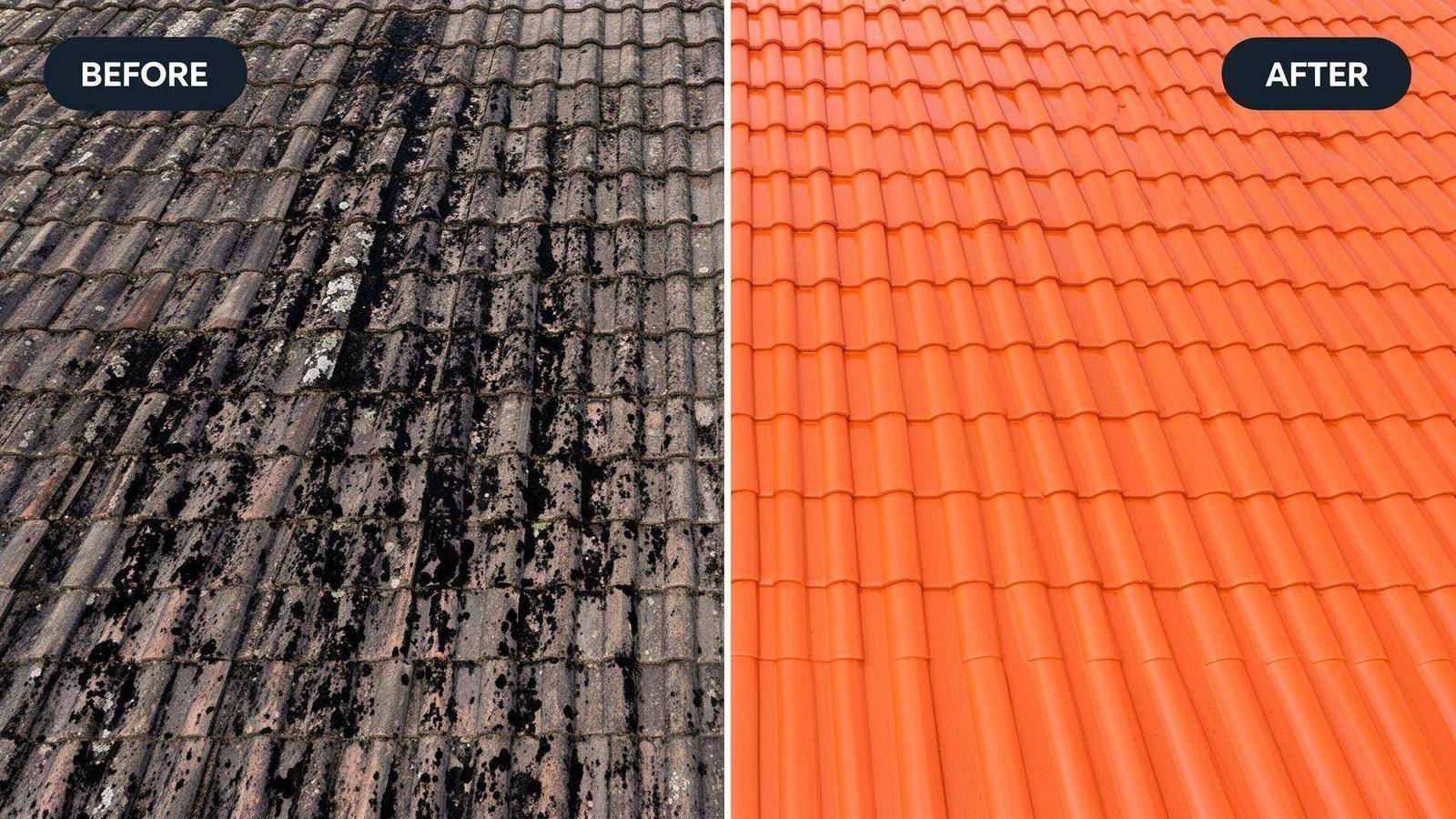
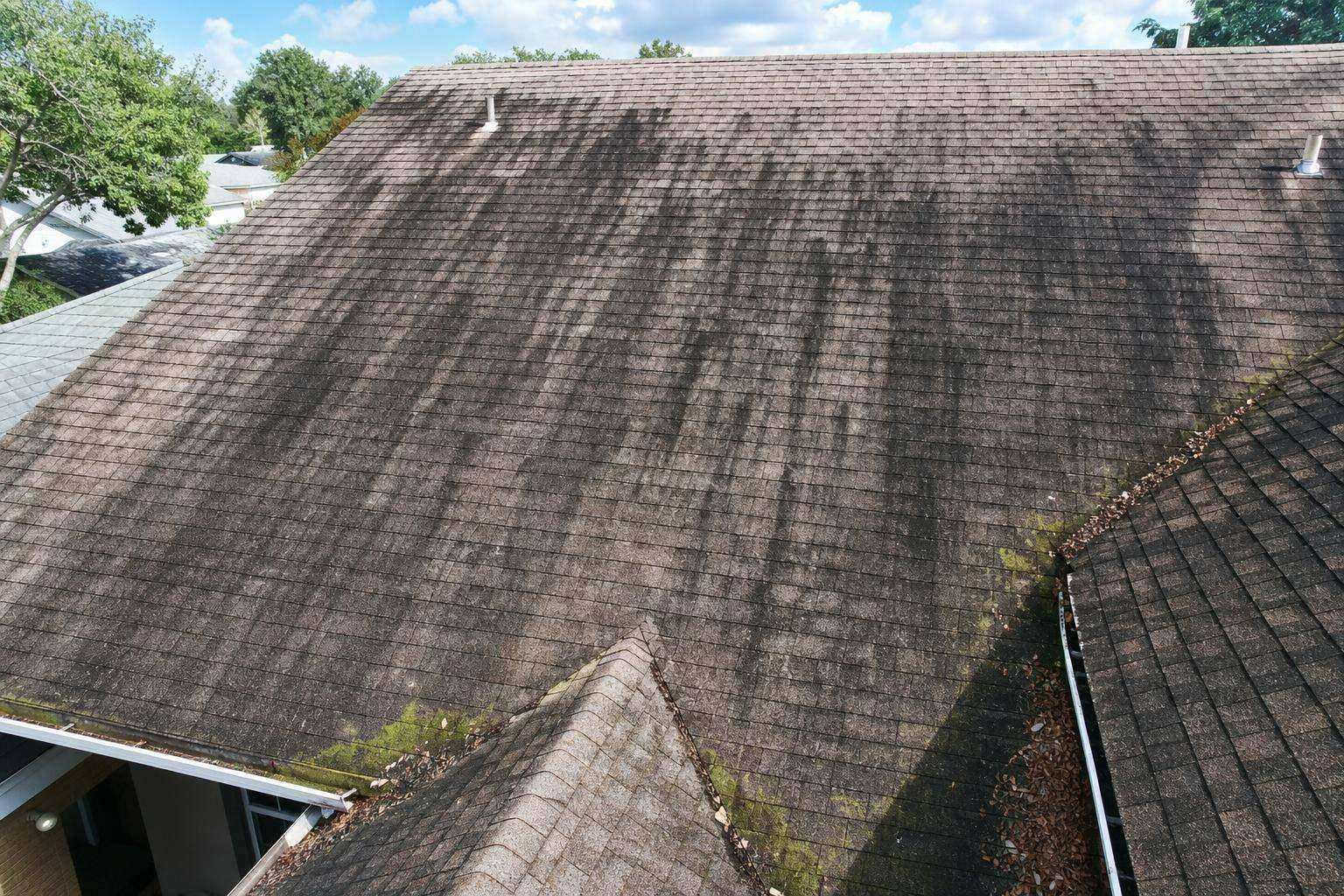
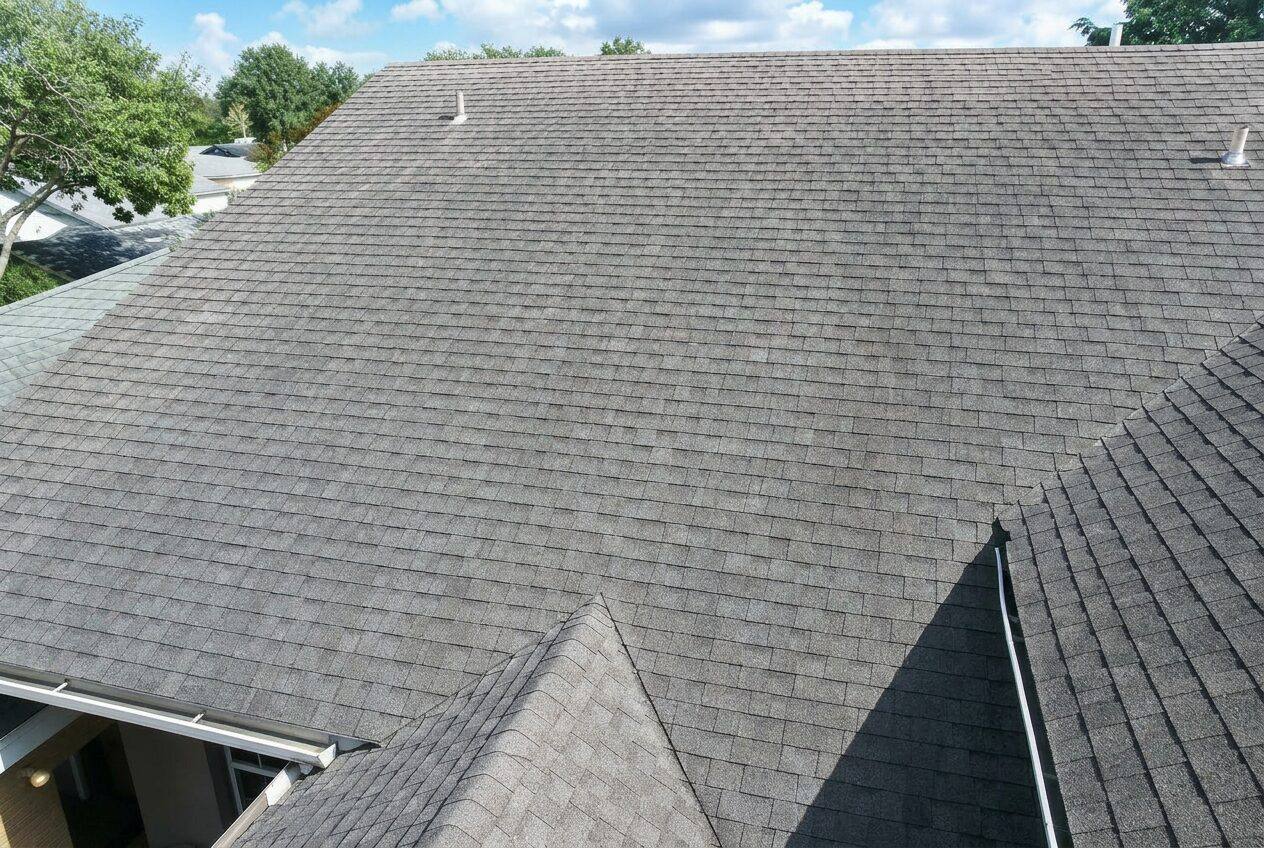
How does drone roof cleaning actually work?+
A tethered industrial drone carries a soft-wash spray head fed by a ground-based pump. Biodegradable detergent is misted over the roof, dwells 5–15 minutes to kill algae and lichen at the root, then a pure-water rinse sheets the dead growth off. The drone never lands on the roof and no person walks the surface — zero foot traffic, zero microcracks, zero broken tiles.
What roof materials can drone soft-wash clean in Miami?+
Barrel tile, flat concrete tile, asphalt shingle, standing-seam and corrugated metal, TPO and EPDM membranes, modified bitumen, and clay tile. Chemistry and dwell time are dialed in per substrate — what works on a Boca Raton barrel-tile roof is not what works on a Doral warehouse TPO membrane.
Will drone cleaning void my roof warranty?+
No — the opposite. Most major roofing manufacturers (GAF, CertainTeed, Owens Corning, Eagle, Boral) explicitly warn against pressure washing and minimize foot traffic on warranted roofs. Drone soft-wash uses low-pressure biodegradable chemistry and zero contact, which is warranty-friendly across every major South Florida system.
How much does drone roof cleaning cost in Miami?+
Residential roofs typically run $450–$1,200. Mid-sized commercial roofs (HOA buildings, retail strips) come in at $1,500–$5,000. Large warehouse, hotel, and multi-building portfolios run $5,000–$25,000+. Pricing is by square footage, material, and pitch — multi-roof and portfolio discounts apply.
Does soft-wash actually kill algae or just bleach it off?+
It kills it. Gloeocapsa magma (the black-streak algae endemic to South Florida roofs) and lichen are biological growths — pressure washing only blasts the visible surface and the spores grow back within months. Soft-wash chemistry kills the organism at the root, so results last 4–6× longer.
How often should South Florida roofs be cleaned?+
Every 12–24 months. Miami-Dade, Broward, and Palm Beach combine 9+ months of UV-driven growing season with salt air, humidity, and shade — ideal conditions for Gloeocapsa magma. Oceanfront properties on Miami Beach, Sunny Isles, and Hallandale Beach often need it every 12 months; inland and west Broward/Palm Beach can stretch to 24.
Do you need FAA permission to fly a roof cleaning drone in Miami?+
Yes. Every flight is conducted under FAA Part 107 by a licensed commercial drone pilot. For controlled airspace near MIA, FLL, and PBI we file LAANC airspace authorizations before mobilization and carry the certificate on every job site.
What insurance do you carry for drone roof cleaning?+
We carry $2M commercial general liability plus dedicated UAS (drone) liability and hull coverage. Certificates of insurance naming the homeowner, property manager, or HOA are issued before mobilization on every project.
Is drone soft-wash safe for pets, plants, and pool decks?+
Yes. Detergents are biodegradable and rinsed with pure water. We pre-wet landscaping below the roof line and cover sensitive plantings before application. Pets stay inside during the dwell-and-rinse window (typically 60–90 minutes) and pool decks are rinsed clean of overspray as part of the workflow.
How long does drone roof cleaning take?+
Most residential roofs finish in 1–3 hours. Mid-sized commercial roofs typically take 4–8 hours. Large warehouse roofs and HOA portfolios run 1–3 days. The drone moves faster than a ground crew because there's no ladder work, no rope rigging, and no walking the roof.
Can you clean a roof that can't be walked on?+
Yes — and it's one of the strongest reasons to use drones. Brittle barrel tile, aging shingle, fragile clay, and warranty-restricted TPO are all unsafe for foot traffic. The drone reaches every section of the roof from the air and leaves zero impact damage.
Do you provide before-and-after documentation?+
Yes. Every project includes 4K aerial footage and photo documentation of the roof before and after cleaning, delivered to the homeowner or property manager. Insurance carriers, HOA boards, and warranty providers routinely accept this documentation.